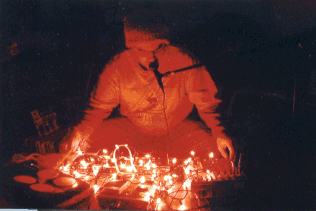
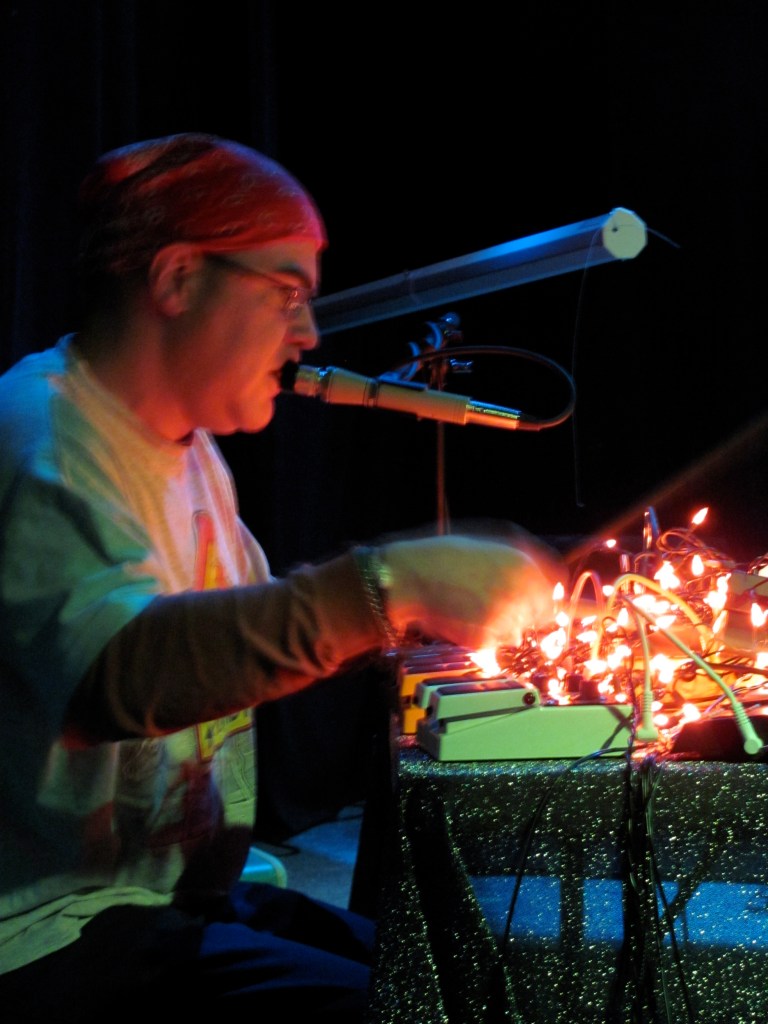
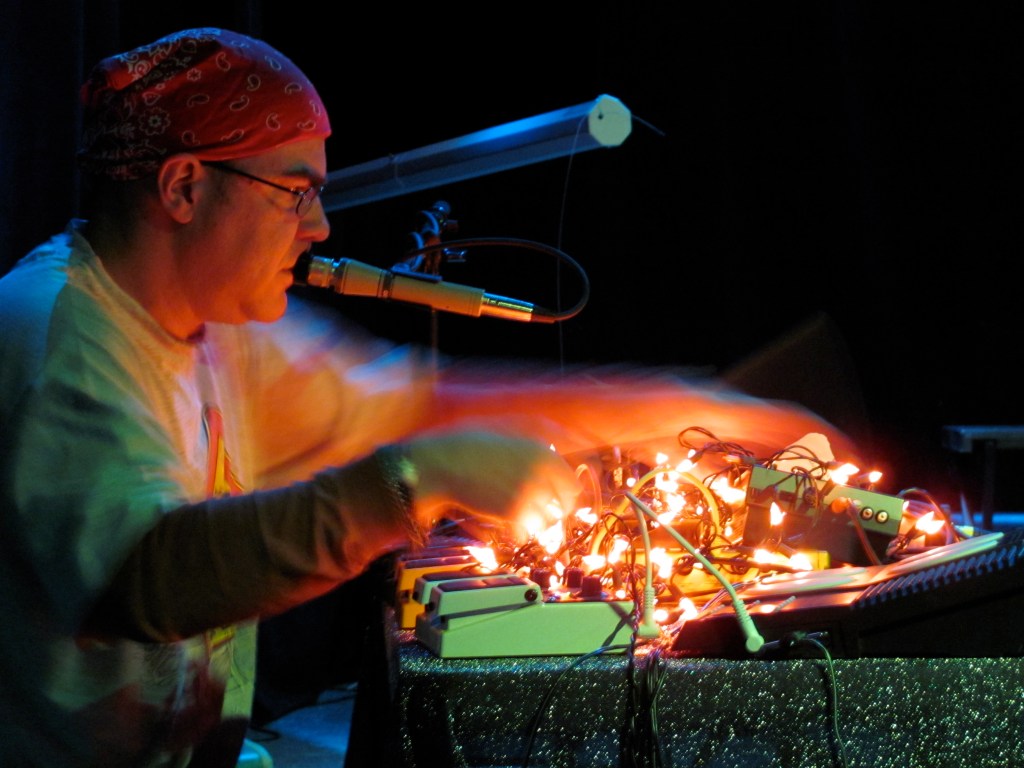
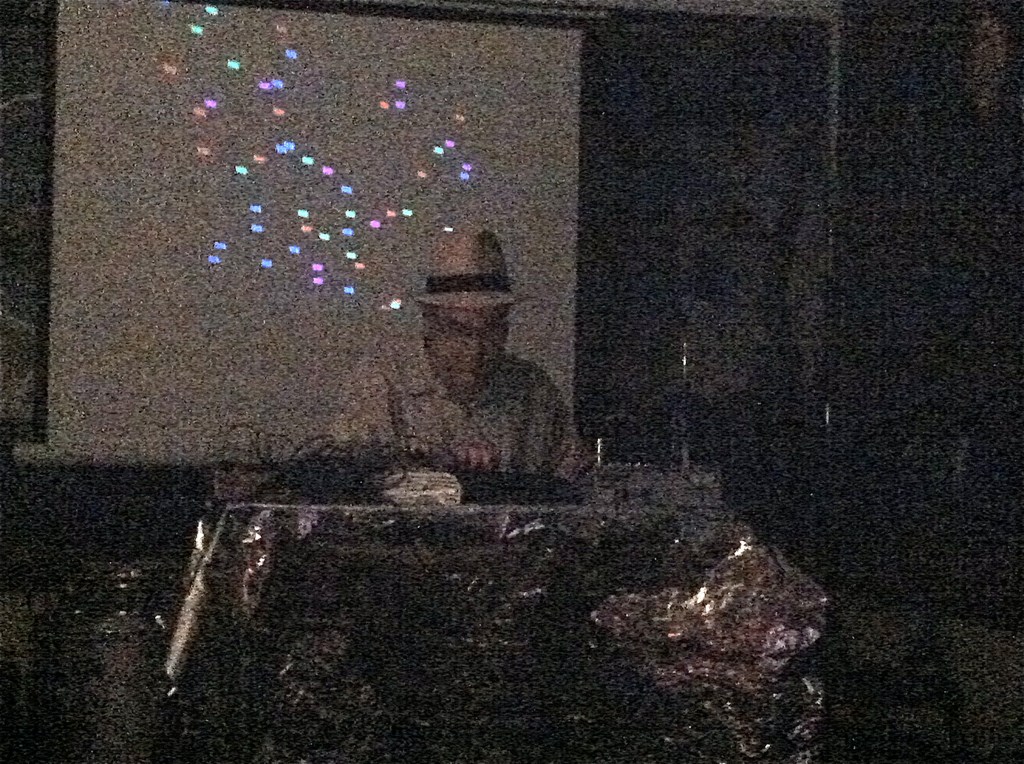
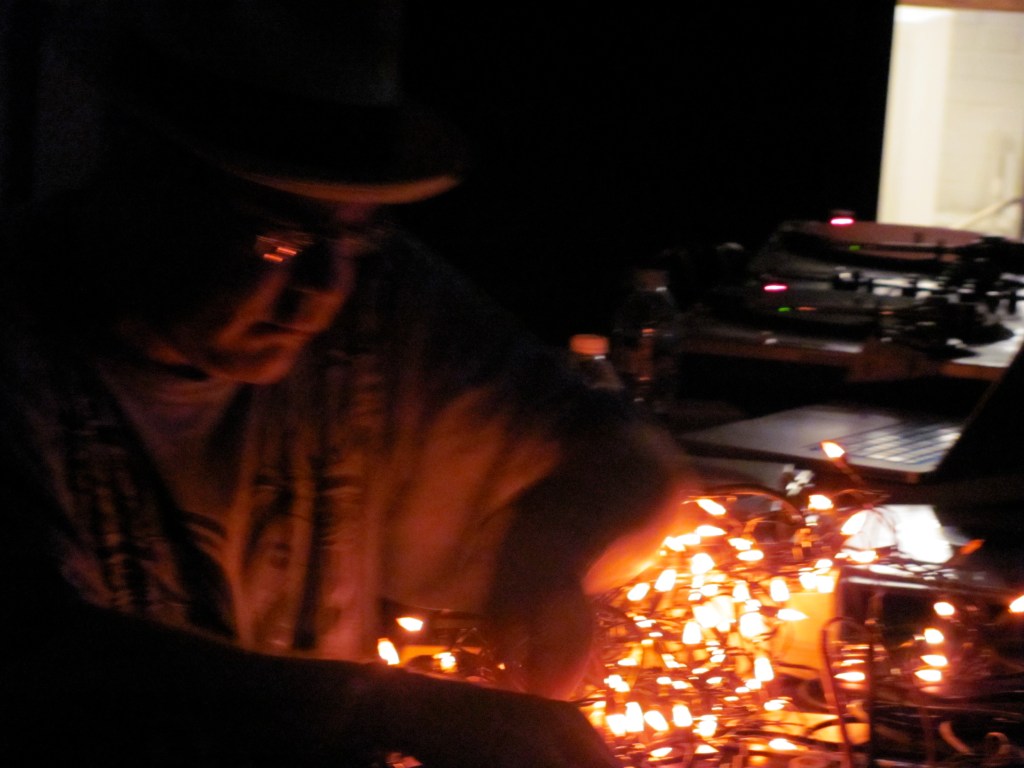
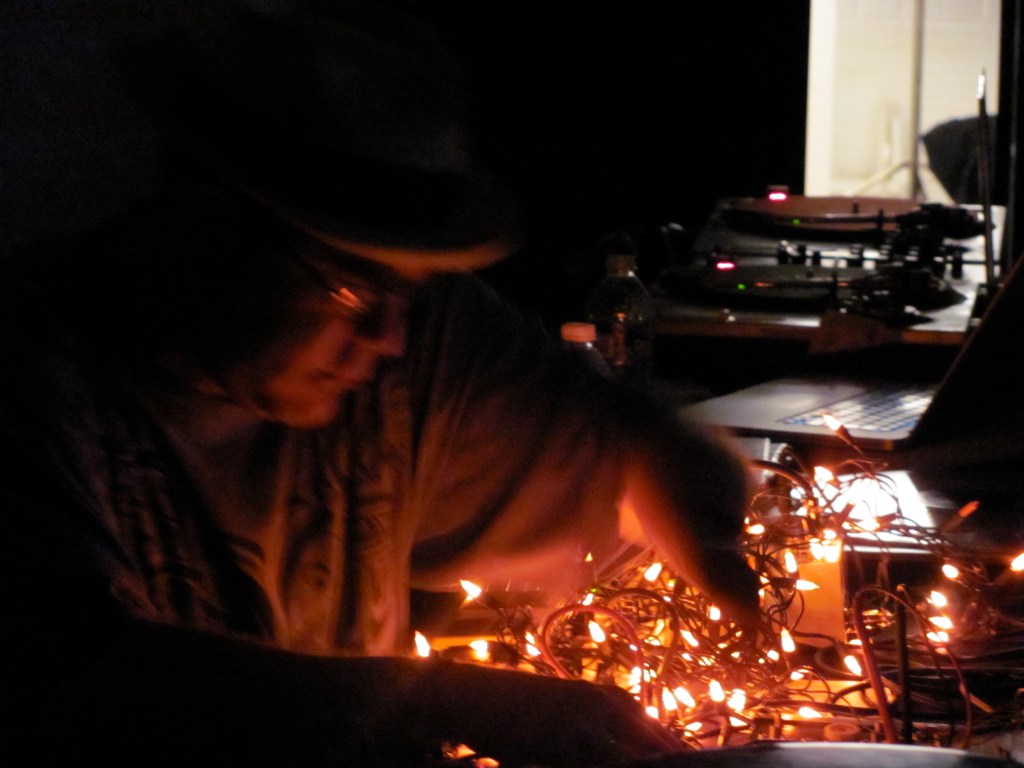
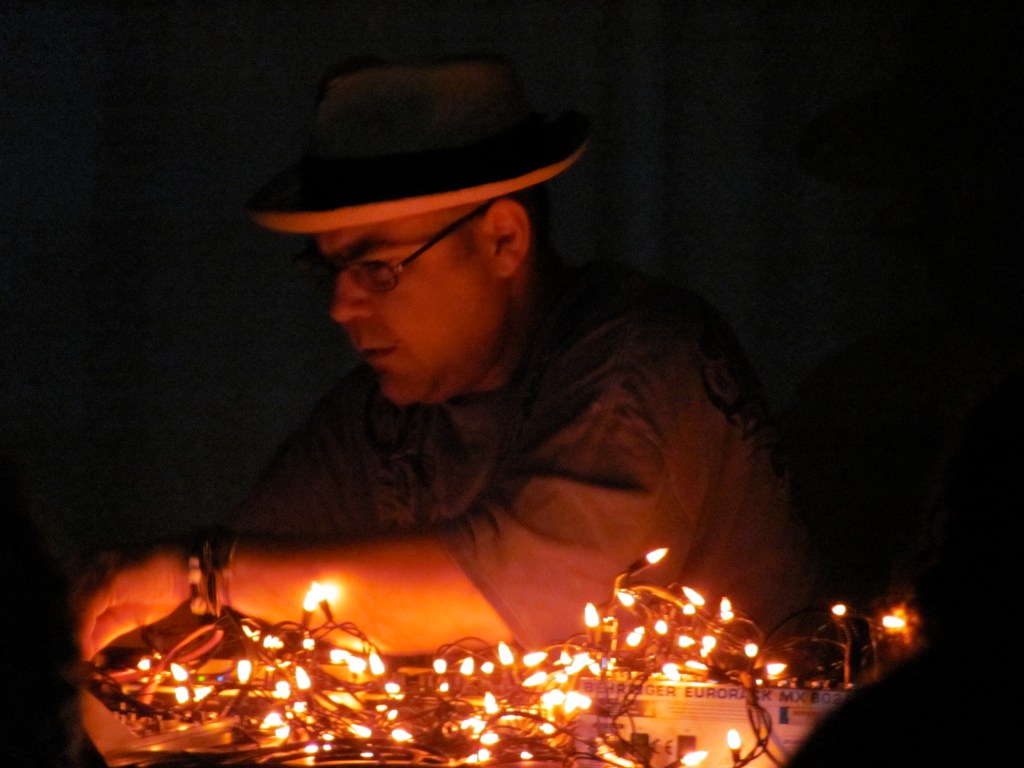
A solo project of Jeff Bagato (aka DJ Panic), Tone Ghosting features a unique homemade instrument he invented himself: playing vinyl LPs with small hacksaw & electronic FX, magnifying, modifying, & energizing the small scrapes & squeaks to create a complex musical vocabulary. The patented “Tone Ghosting process” includes looping these sounds and using them as raw material for new improvisations with a combination of other electronic sounds, including a hotwired homemade synthesizer, drum machine, and/or freeform vocal madness. Tone Ghosting creates a unique sonic universe somewhere between the attack of power electronics & the complex mind-body games of electronica & non-idiomatic free improvisation.
Tone Ghosting has released several CDRs, including Castle Changes on Sockets CDR and others on his own Panic Research Audio label. Most recently, Plastic Voice (2011), documents experiments with lyric fragments, and Quasar Pulsar beep beep (2010), are the first TG tracks recorded in a real studio and feature guest electronics from North Carolina’s Promute. In 2007, a mini-CDR documenting the Matt Weston/Tone Ghosting duo accompanied their mini tour of VA/NC/TN. The Wig Fleet mini-CDR received reviews in The Wire and Signal to Noise. Writing in The Wire (March 2007), Byron Coley noted “…jumbles of moist-sounding noise, overlaid with random beat action and effects. It’s good, weird homemadeness.” And Signal to Noise columnist David Cotner wrote “…tinny woodland creatures playing instruments such as a hacksaw, vinyl, FX, and drum machine….It is heteroglossia made disc, spread out across one-half an hour and that’s more than one can usually expect from three twinkling inches” (STN Spring 2007). Writing about Castle Changes in his Noiseweek blog, Wire contributer Marc Masters said TG “uses volume and pace on this one to create little moments of structure and momentum–the timing of some of his pull-backs and push-forwards are just perfect, like an endless string of set-ups and punch lines. Maybe that’s the best way to think of Castle Changes‘ internal clock, like the absurdist jokes in Rosencrantz and Guilderstern are Dead, divining surreal humor from endless loops and infinite possibilities.”





 jeff bagato