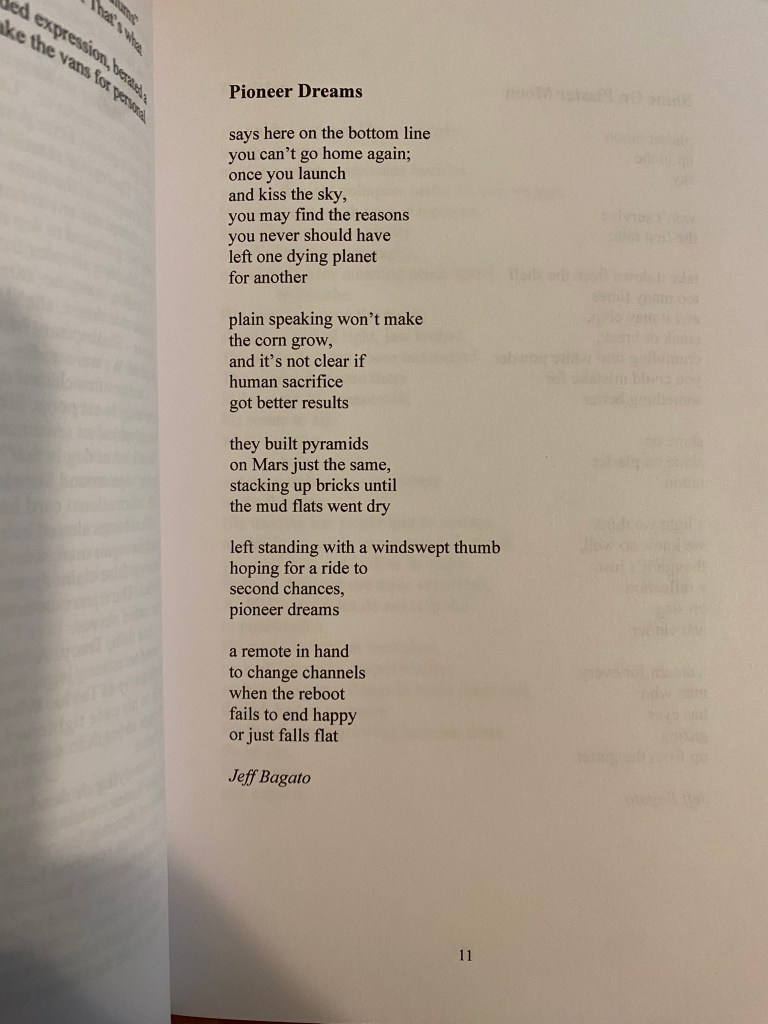
The Fall 2026 issue of Chiron Review (#142) arrived in the mail last week. I’m pleased to be represented with two poems: “Pioneer Dreams” and “Shine On Plaster Moon.”
Chiron Review is a perfect bound magazine available online and in bookstores.
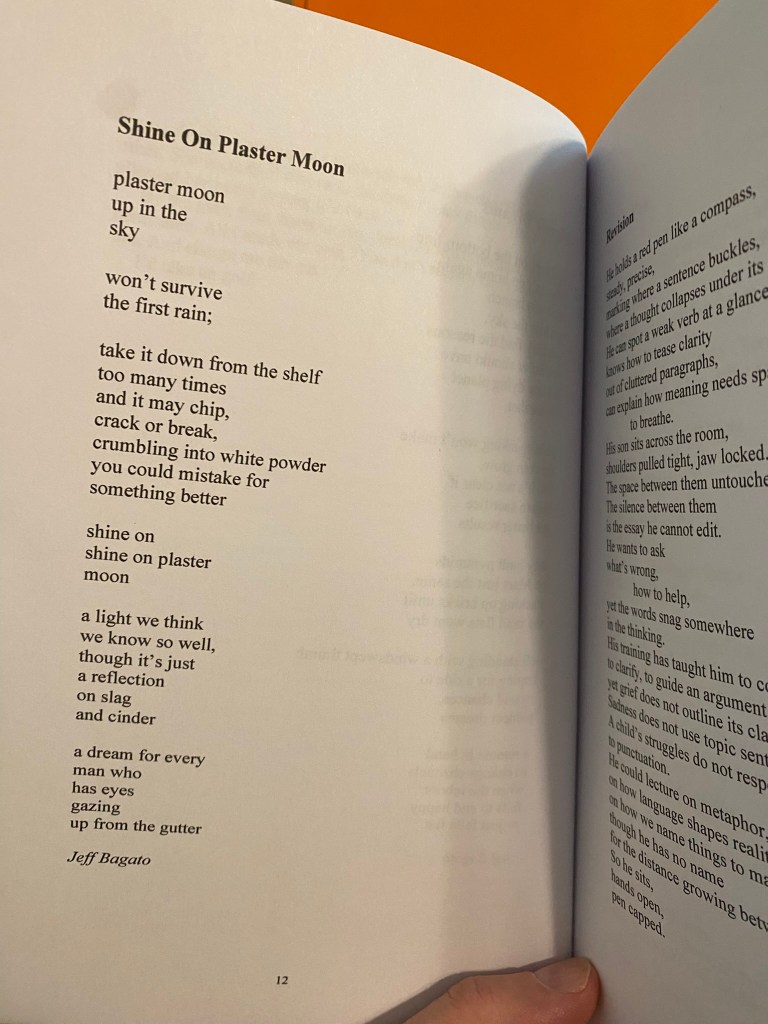
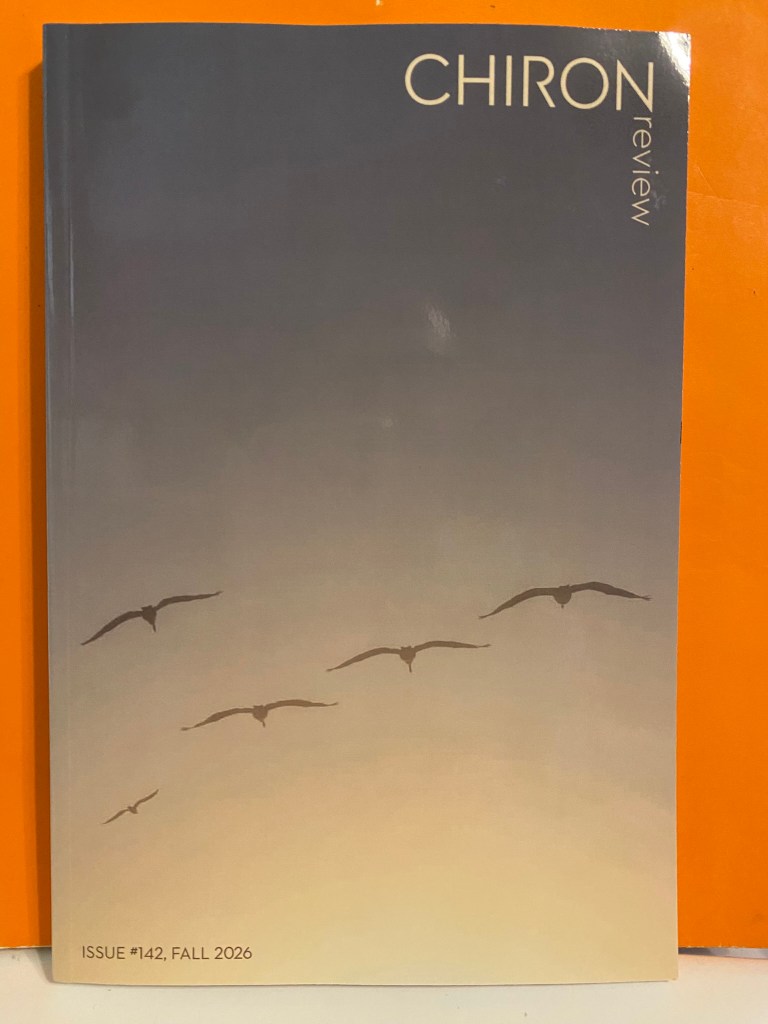
The Fall 2026 issue of Chiron Review (#142) arrived in the mail last week. I’m pleased to be represented with two poems: “Pioneer Dreams” and “Shine On Plaster Moon.”
Chiron Review is a perfect bound magazine available online and in bookstores.
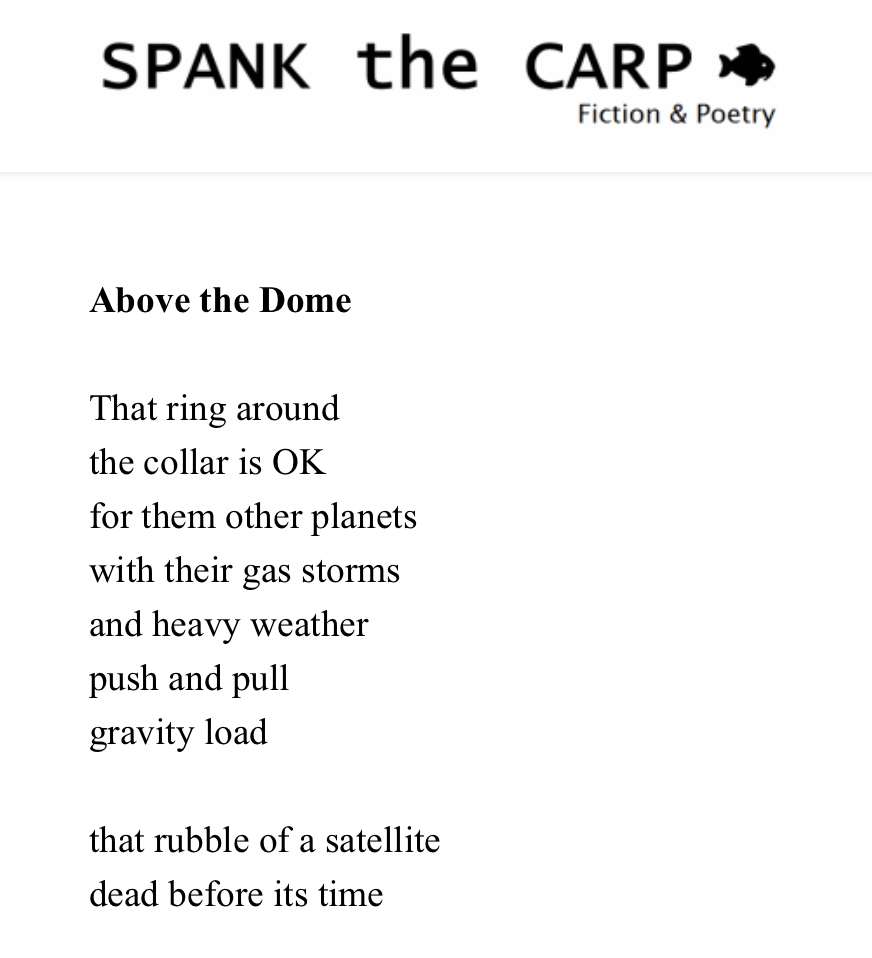
Online literary journal Spank the Carp recently published its Issue 94 for August 2026. I’m pleased to be part of it with one poem, “Above the Dome.” You can read the full piece here.
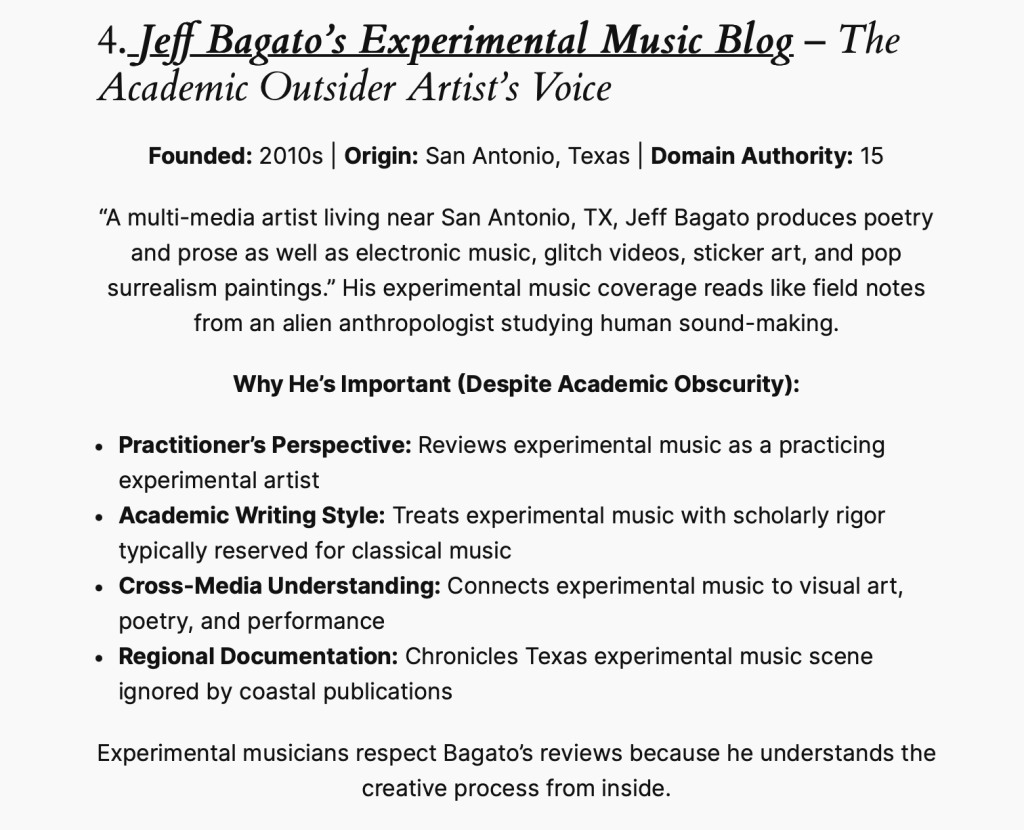
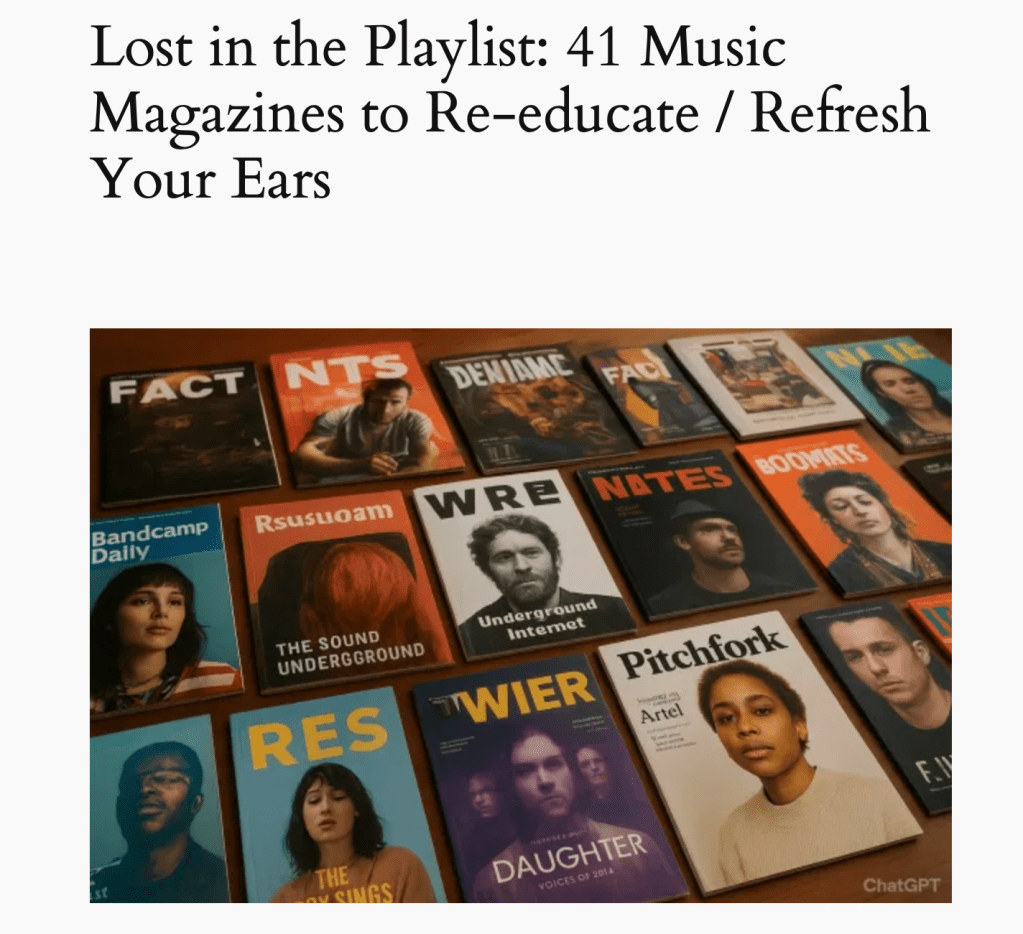
I’ve long been a fan of disinformation in regard to my own projects, but today I discovered a totally inexplicable internet artifact that goes far beyond any prior misstatements, errors, untruths and lies involving my work. As part of a Vibes Magazine (VBMGZN) article called “Lost in the Playlist: 41 Music Magazines to Re-educate / Refresh Your Ears,” item #4 cites a music blog authored by me, focusing on experimental music! If you are reading this blog right now, you know it is not about “experimental music”–except as it relates to my own music production–but about my own “misadventures” in various types of self-publishing. This Vibes Magazine blog article has to be one of the weirdest self-publishing misadventures I’ve ever been involved in. And I’m not even sure I’m involved!
It is true that I used to be a music writer, with publications including the Washington Post, Option, Washington City Paper, and others. And it is true that I once edited and published a fanzine called Mole Magazine. And it is also true that I “curated” a concert series for experimental music, called Electric Possible. All of those projects ended a long time ago. Because I have already done these things, and know what a thankless pain in the ass they all were, I would NEVER do any of them again. And I certainly wouldn’t write a blog about music of any kind.
This Vibes Magazine segment gets weirder. It claims that my “experimental music blog” focuses on Texas music. It’s true I live in San Antonio, but I know next to nothing about the contemporary music scene–let alone the experimental music scene–here or in the state of Texas. The article says some very nice things about my “work.” For instance, that my blog “treats experimental music with scholarly rigor typically reserved for classical music.” That’s probably the nicest thing anyone has ever said about any of my writing; I only wish it had some basis in reality!
The statement “experimental musicians respect Bagato’s reviews because he understands the creative process from inside” is also very nice. It’s astonishing because I have never received such praise from any musicians I’ve ever known!
It’s also weird that the article links to my fictional blog, sending readers here. As you can see, this page is not actually a blog about music. It does list a bunch of music groups–but these are only projects I have been involved in, most of them now defunct. And all of them were Washington, DC based projects.
No information about the Vibes Magazine blog (not to be confused with VIBE magazine, LOL) seems available on the site, and no author is listed for the article in question. Where does it originate and who writes and publishes it? The answer may lie in the photo (below) leading the article; the image shows a spread of music magazines, but the garbled titles point to an AI origin. I must assume the article itself was compiled using AI and then dumped on the blog as filler.
It doesn’t really matter. I just wished such glowing praise actually focused on something I actually did!
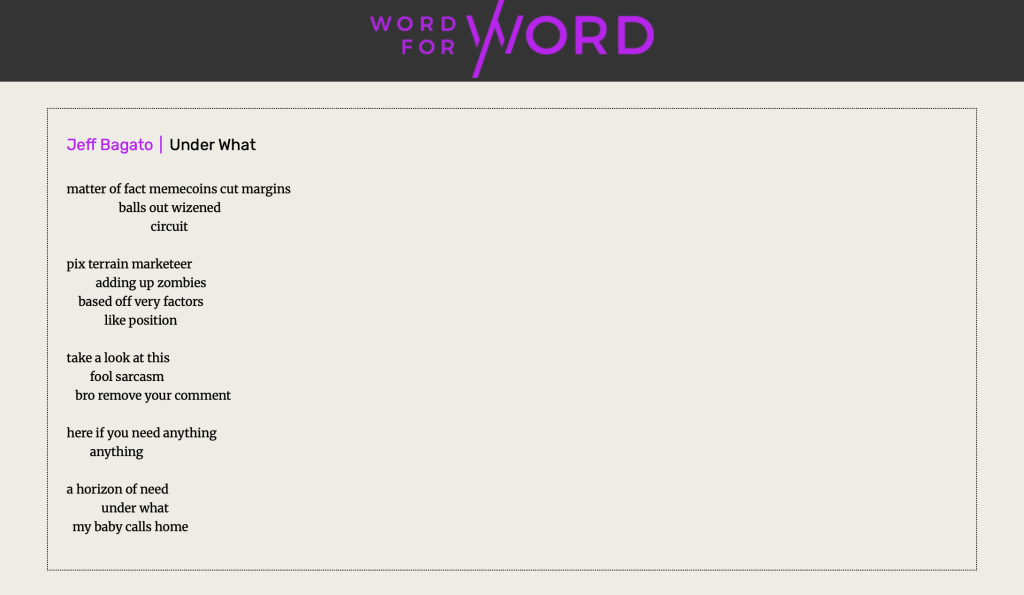
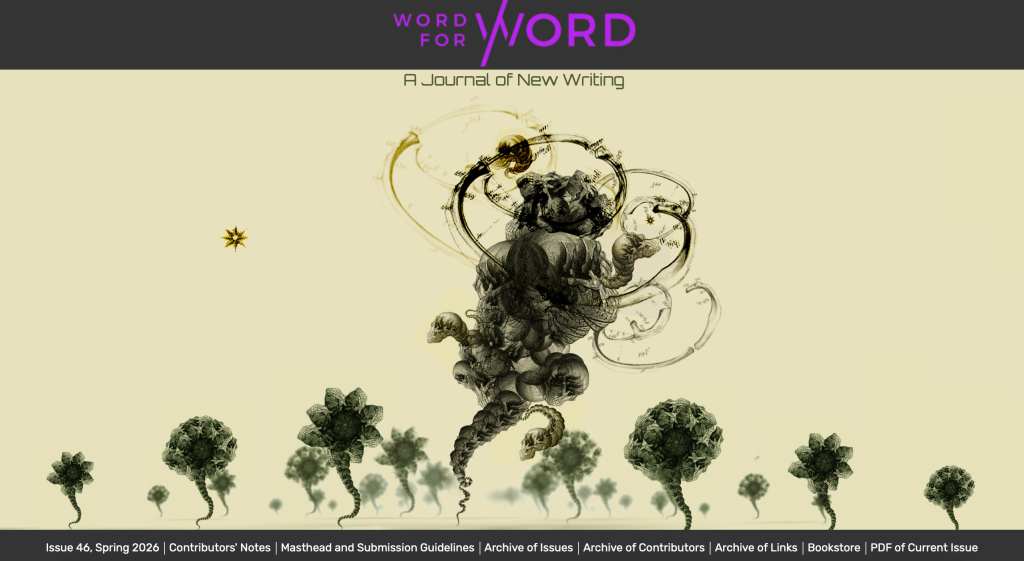
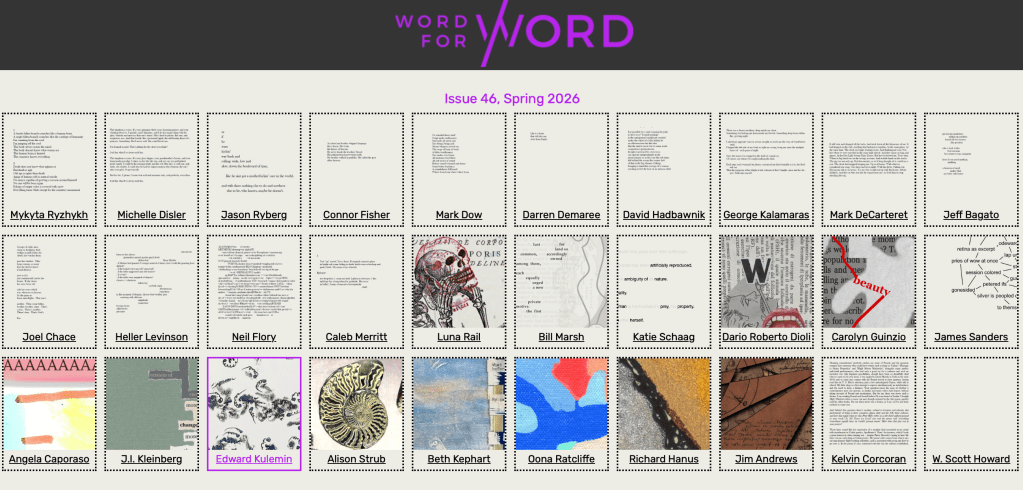
Experimental literature journal Word For/Word has released it’s Issue 46 for Spring 2026. I’m pleased to be included with six poems: “Under What,” “Been a Problem,” “Buzzard Blow,” “Basic Info,” “On Your Cake Day,” and “best baster.” You can read these pieces here. Below are the cover image for Issue 46, and the very nice layout for the table of contents.
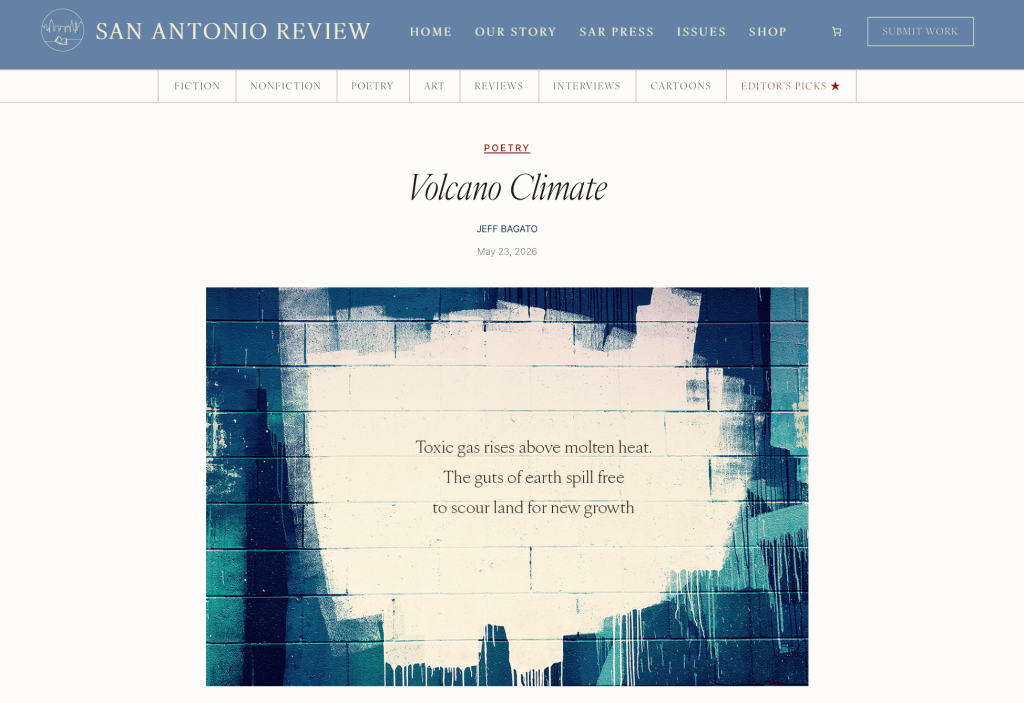
Today, my poem “Volcano Climate” was published in online literary journal San Antonio Review. You can read it here.
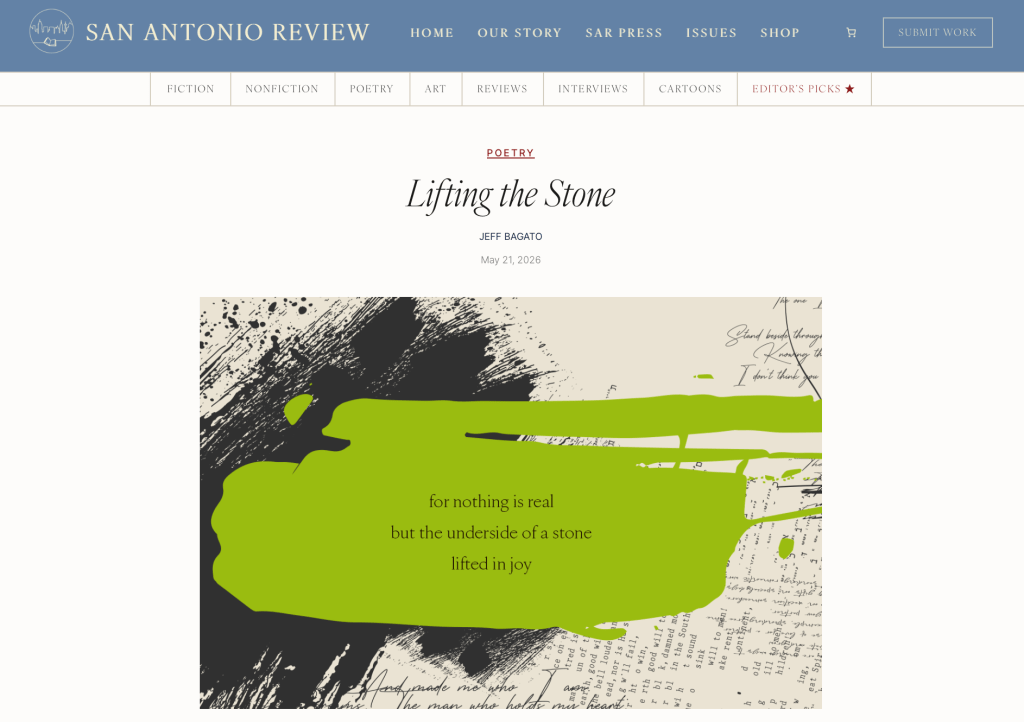
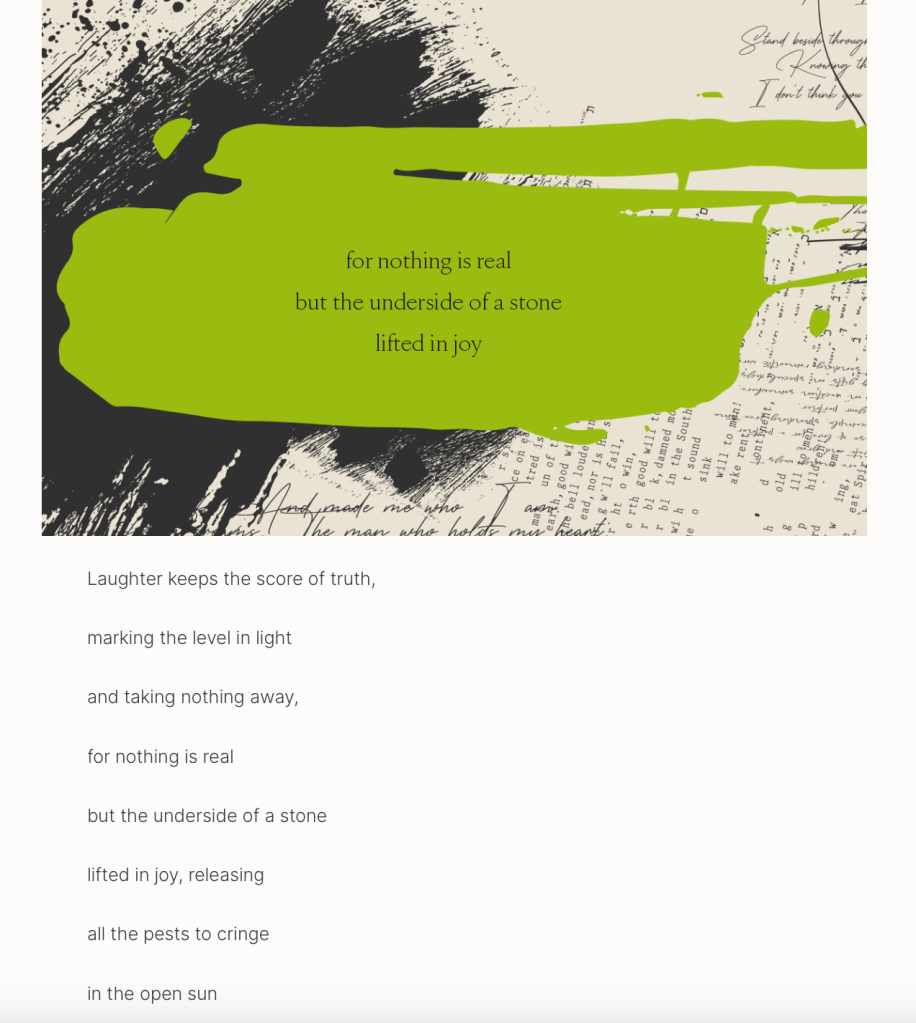
Today, my poem “Lifting the Stone” was published in online literary journal San Antonio Review. A rather short piece, you can read it here.
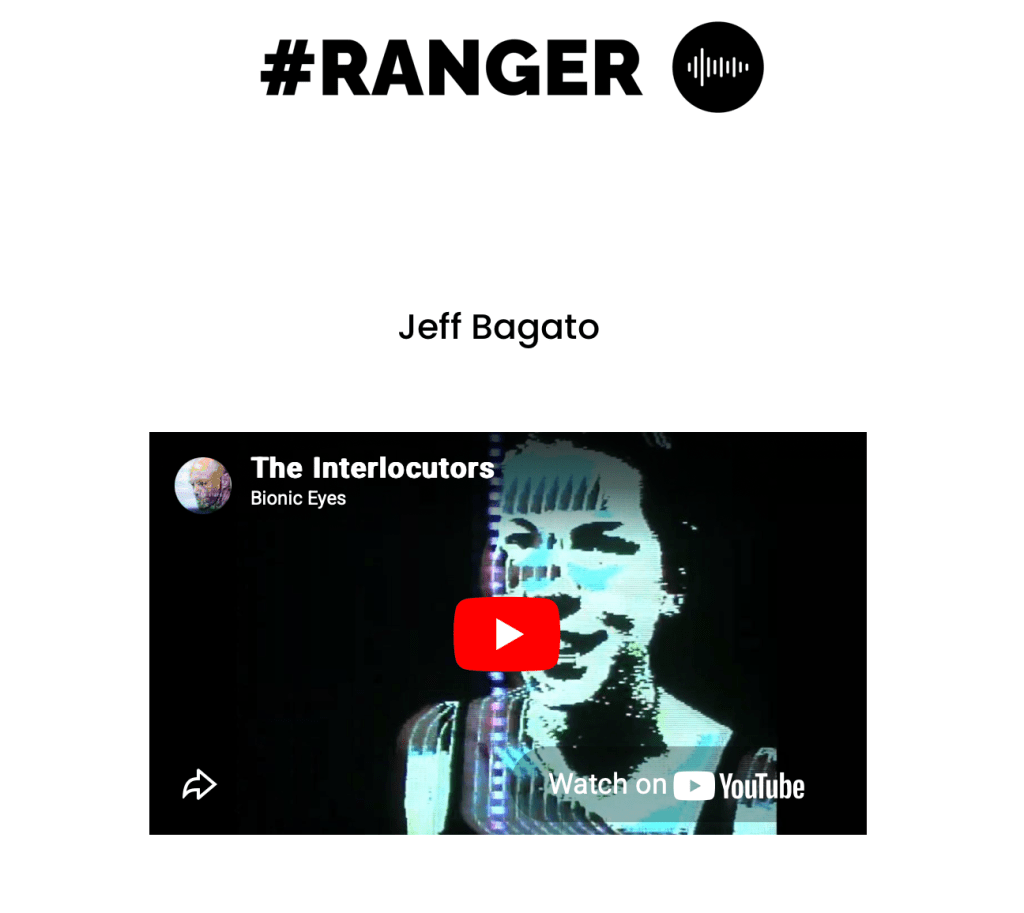
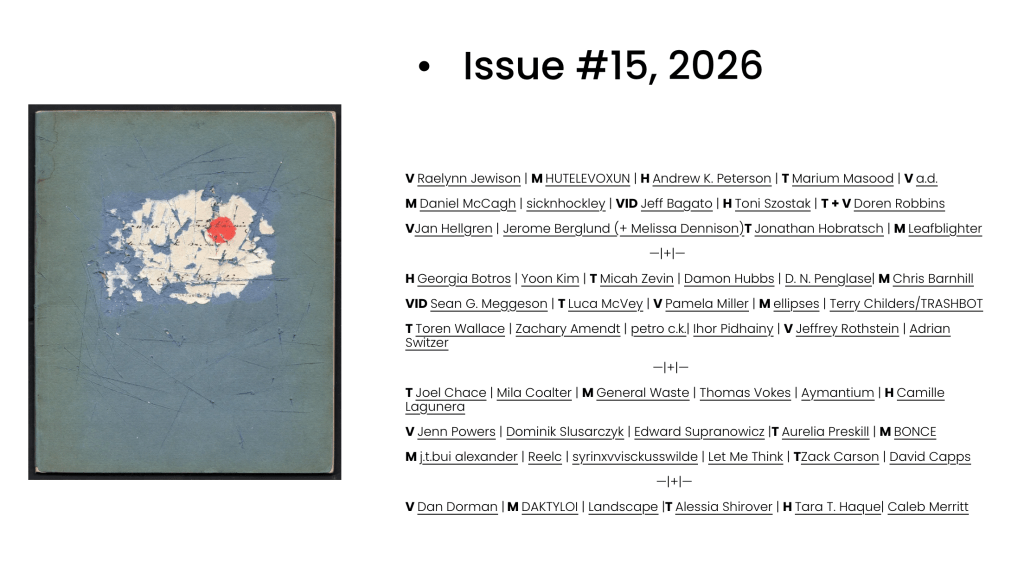
Experimental literary magazine Ranger has released its 15th issue, packed with avant garde poetry, visuals, video, and music. The contents is pictured below.
I’m pleased to be represented by a glitch music video with “anemic” vocalizations, entitled The Interlocutors. Music by Hearasay in Paradox Lust, from the Warlock Zone album (on Bandcamp here). You can check out the video here.
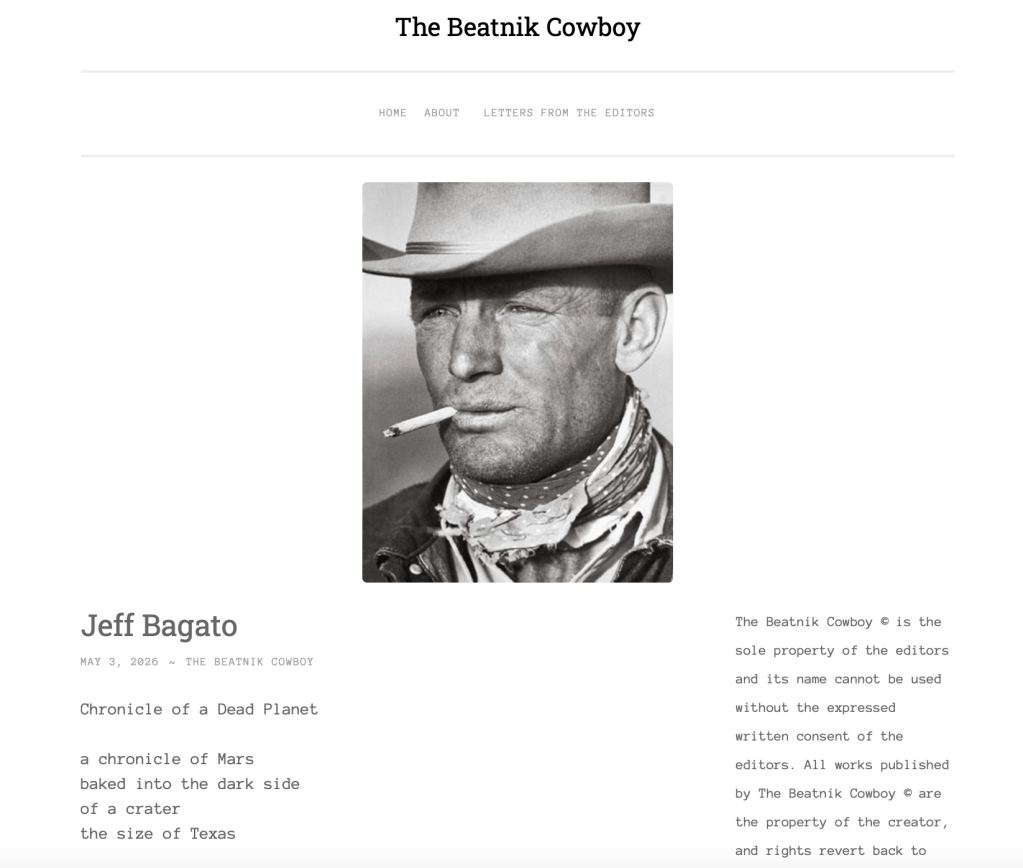
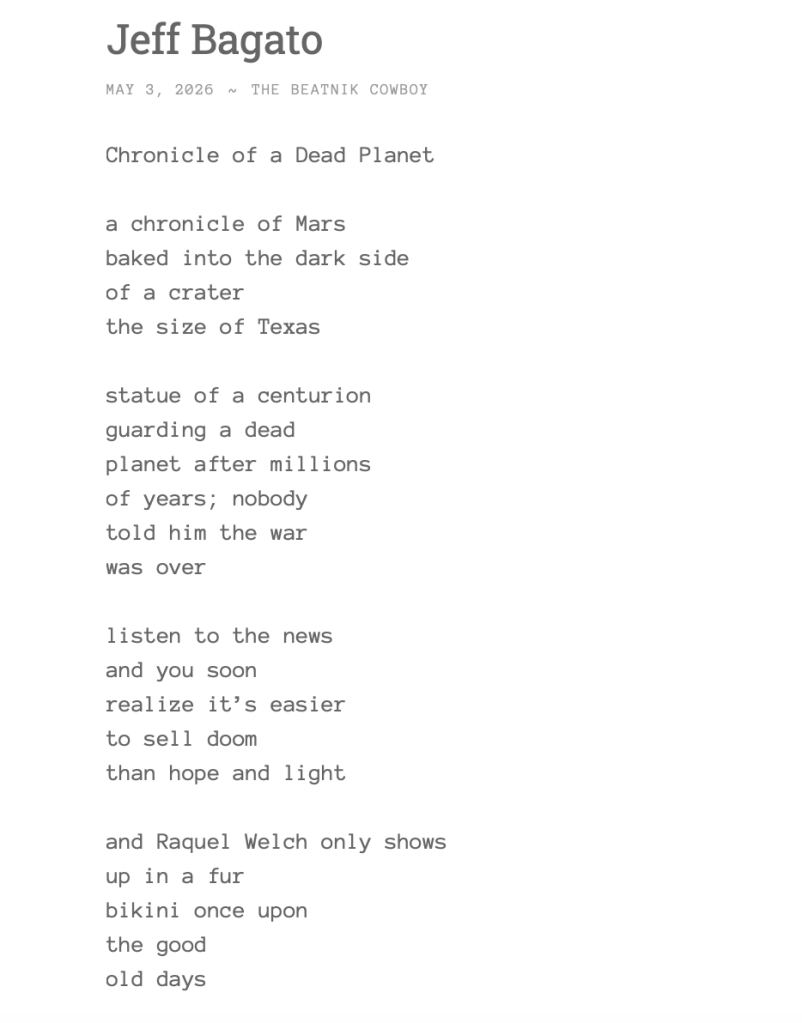
Two of my poems were published in outlaw poetry journal Beatnik Cowboy yesterday: “Chronicle of a Dead Planet” and “Mars Is the New Mars.” You can check them out here.
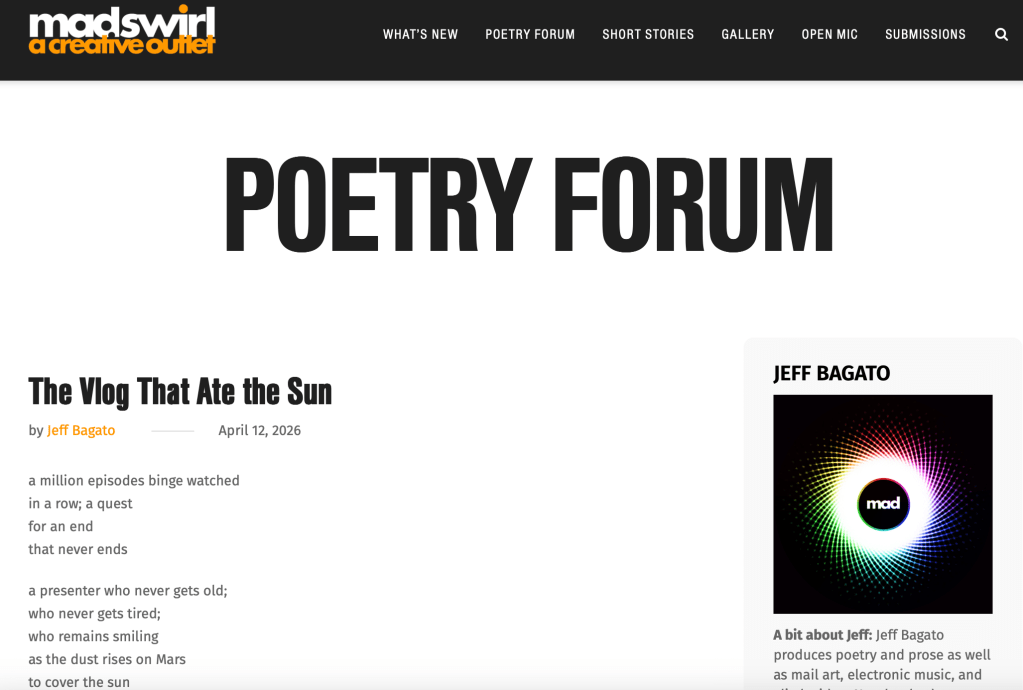
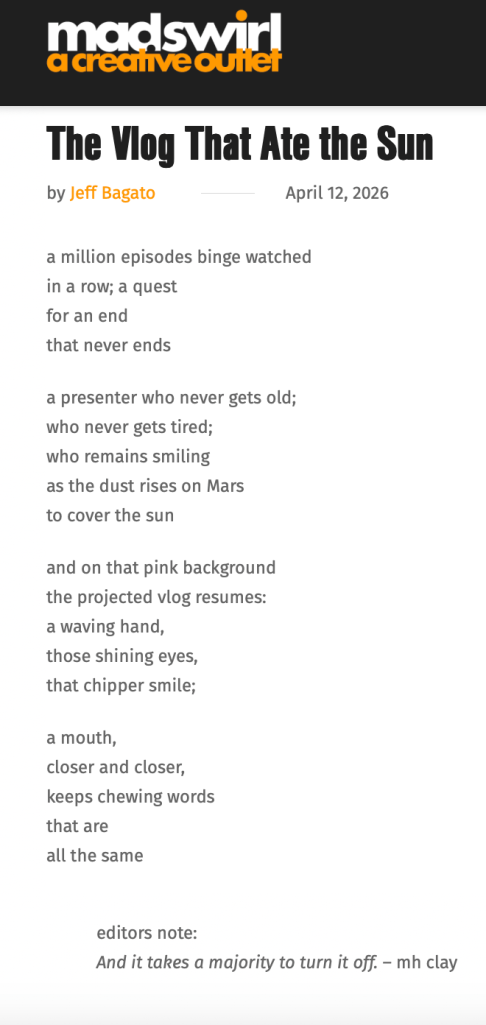
Today, my poem “The Vlog that Ate the Sun” was published in Mad Swirl literary review. You can read the full poem here.
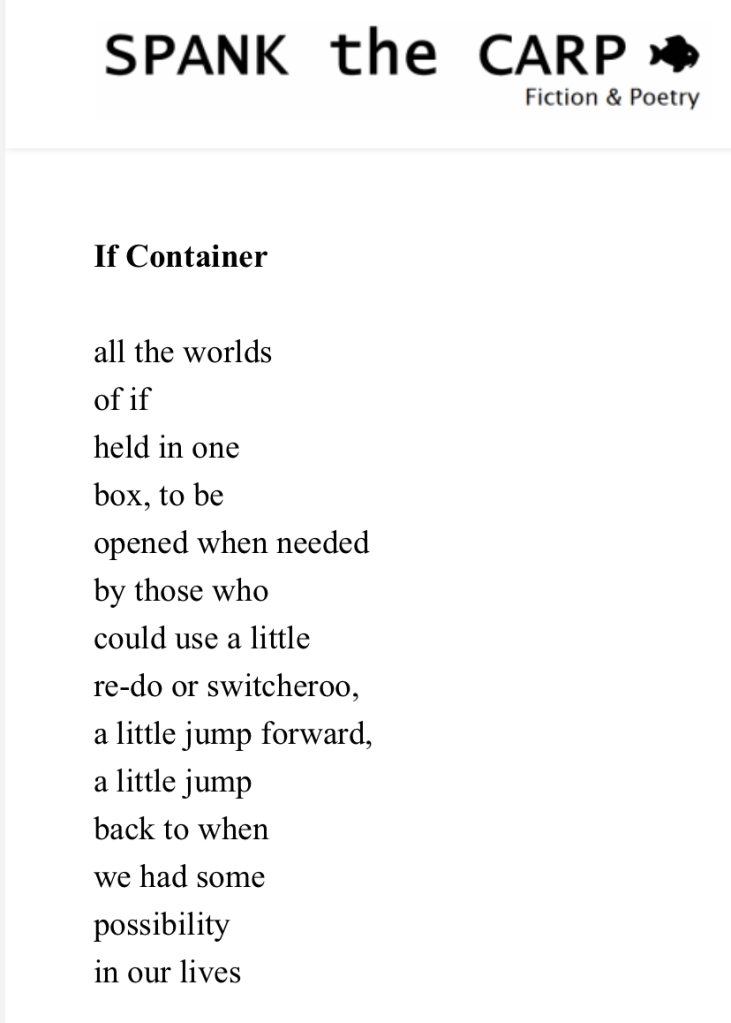
The new issue of literary magazine Spank the Carp was released today (April 1). I’m pleased to be represented by one poem “If Container.” You can read the complete poem here.

