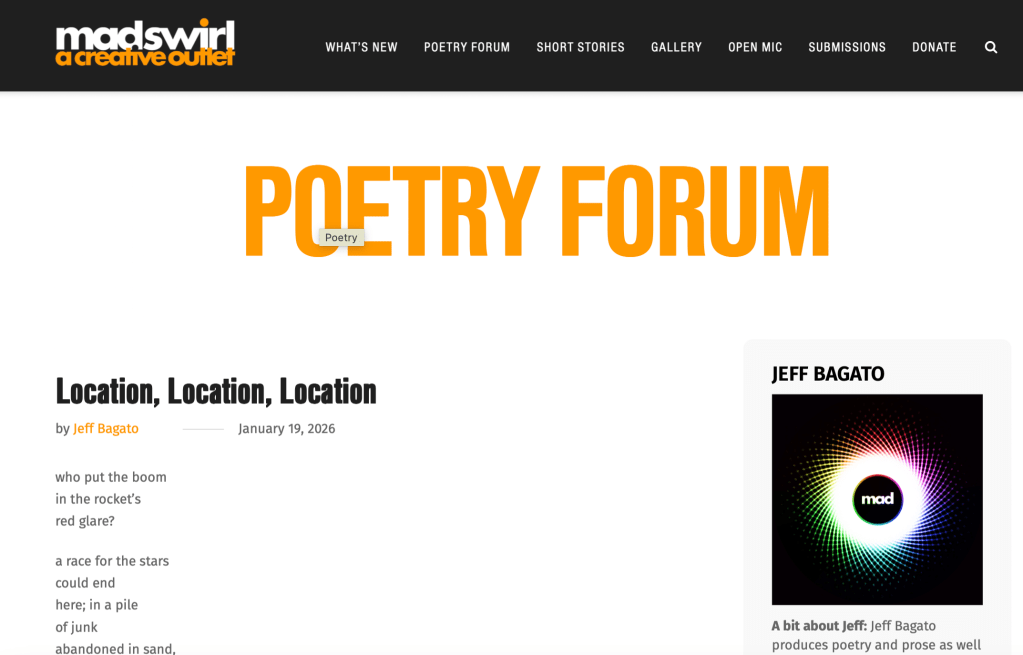
Today my poem “Location, Location, Location” was published in online literary journal Mad Swirl‘s Poetry Forum. You can read the full piece here.
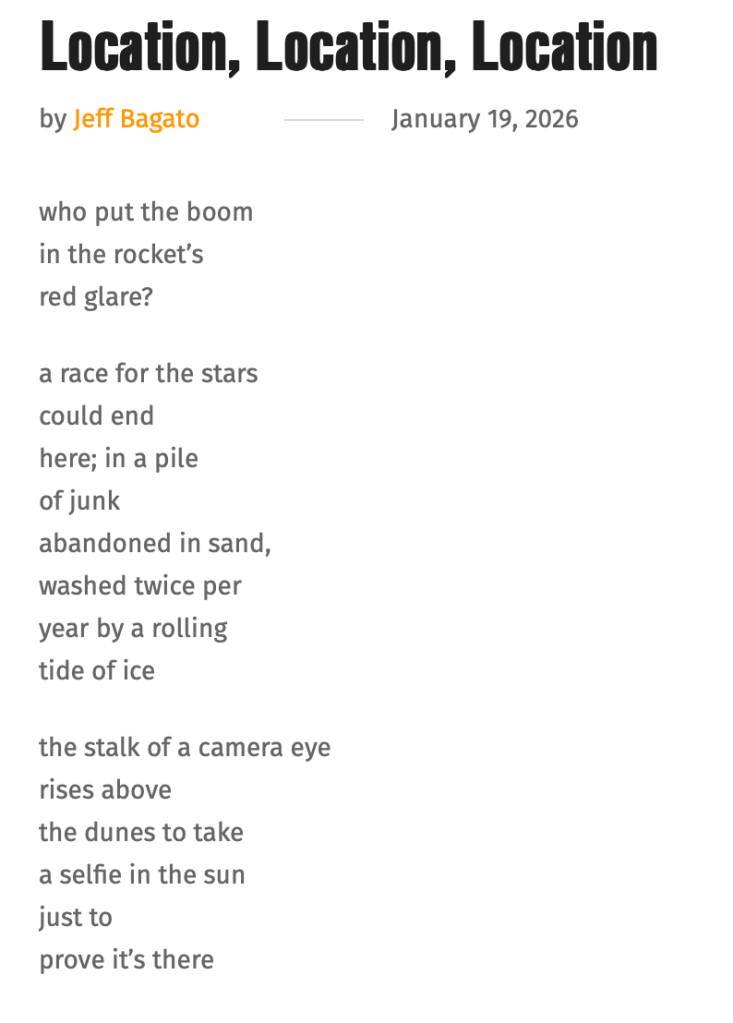
Today my poem “Location, Location, Location” was published in online literary journal Mad Swirl‘s Poetry Forum. You can read the full piece here.

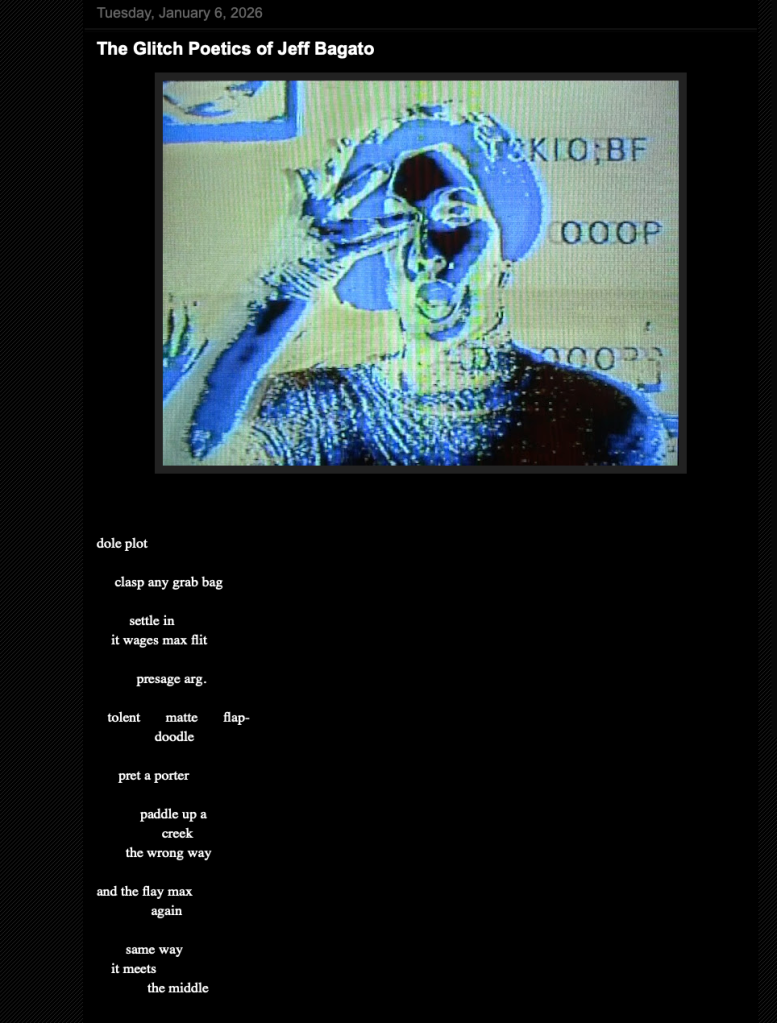
January 6, 2026–Today, a portfolio of my video and text work was published in Var 2(x), an online literary journal for extreme experimentation. Included are 5 video stills with asemic language elements pulled from the raw footage for my music video “New Brain Imprint,” as well as a link to the source video on YouTube. The main feature is a selection of 10 text pieces: “dole plot,” “badge of dolor,” “Arriba malfunction,” “regular quill,” “scrap grind hotel,” “taps patent fait enter,” “wailing watcher weight,” “game life atoll,” “change delinquent,” and “anti-rule characterized.”
The editors put all this under the headline “The Glitch Poetics of Jeff Bagato,” which seems a pretty good descriptor of this period of my written work. I’ll have to start using that tag myself!

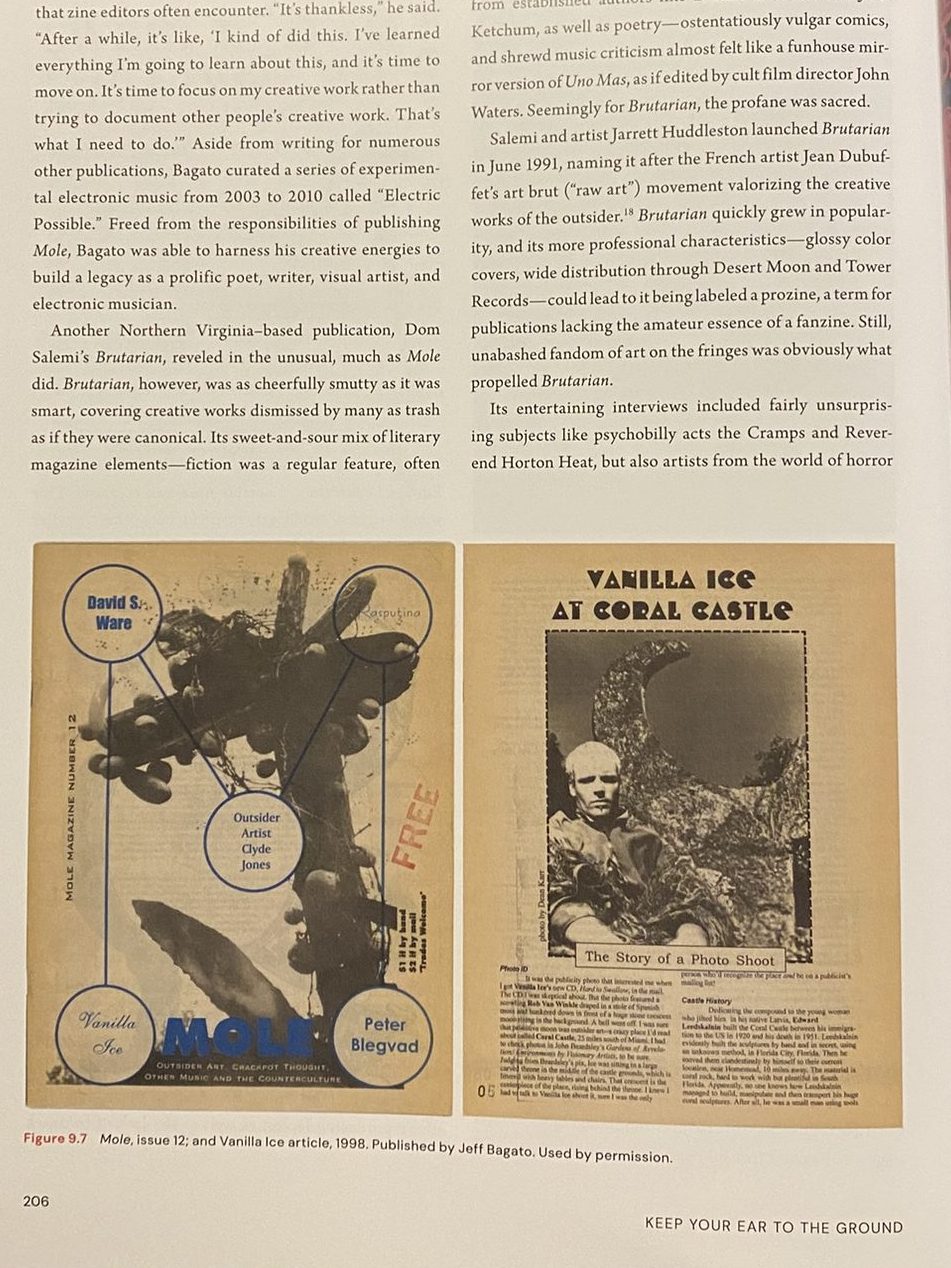
Keep Your Ear to the Ground: A History of Punk Fanzines in Washington, DC was recently published by Georgetown University Press. Written by John Davis, member of punk band Q and Not U and an archivist at the University of Maryland library (he commands the DC Punk Archive there), this large tome makes a case for the strength of the DC zine scene of decades past. My own fanzine, Mole, is represented in the book on pages 204-206; there are pictures of two issues, and a rather nice capsulized history of the 13 issues published from 1989 to 2001. The only “error” is citing Mole as a photocopied zine; to set the record straight, Mole was pro-printed by offset printing for the duration of its run.
There’s much I didn’t know about DC zinedom past. From my recollections of the 90s, I would not have said a book was merited, but Davis dug deep and it’s a strong showing. If you’re not already sick and tired of the zine hype, you may want to check it out.


Ranger is an online literary journal of avant garde literature, music, video and visual art; the 13th issue was released recently containing the usual smorgasbord of weird and wonderful challenging works. I’m pleased to be represented in this issue with the glitch music video “Reality Programmer,” which includes difficult music from Hearasay in Paradox Lust.
You can view the video in Ranger here.


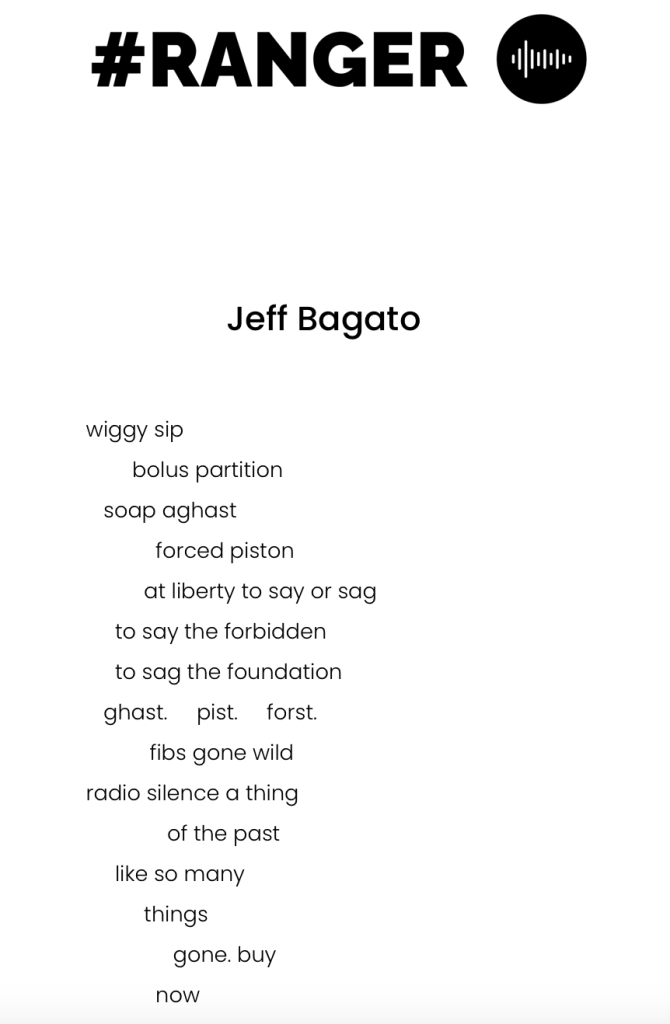
Online literary magazine Ranger recently released its 12th issue, another smorgasbord of experimental artifacts in textual, video, musical and visual forms. I’m pleased to be represented by six poems: “wiggy sip,” “pilled blame,” “prattle burn misc,” “About Calls,” “bastion fire crag,” and “mog turner.” You can read them here.
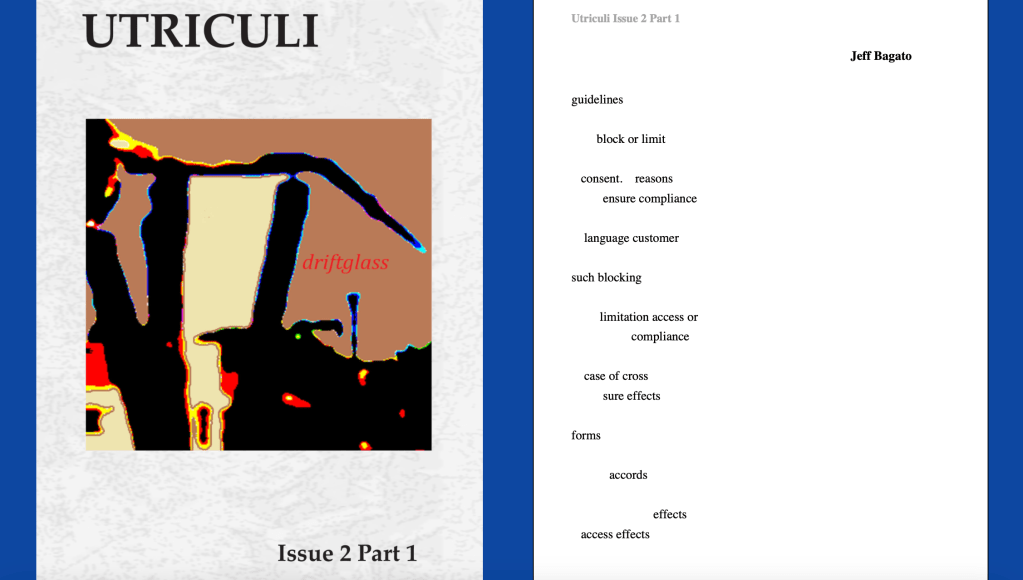
Utriculi is an online literary journal for experimental writing, and something of a “sequel” to Otoliths, both journals being published by Sandy Press in Australia. The second issue of Utriculi was released recently in print and digital formats, and it seems similarly encyclopedic in scope to the earlier journal, comprising another who’s who of the international literary avant garde. I’m pleased to be represented by five poems (starting on page 150 of Issue 2, Part 1): “guidelines,” “If those aren’t the reasons, what,” “jade slick,” “bezel delight,” and “blade lout parse.”
You can view the complete online issue, both Parts 1 and 2, here. The print issues are available via Amazon here.

My poem “The Grapefruit Hits the Grinder” was published in Mad Swirl’s Poetry Forum on October 14. You can read the full piece here.

My poem “Singing through the Flats” was published last week in the online journal Rat’s Ass Review Fall/Winter 2025 issue. It’s been a while, so I’m pleased to appear on the pages of this fine journal for outlaw poetry. You can read the full poem here.
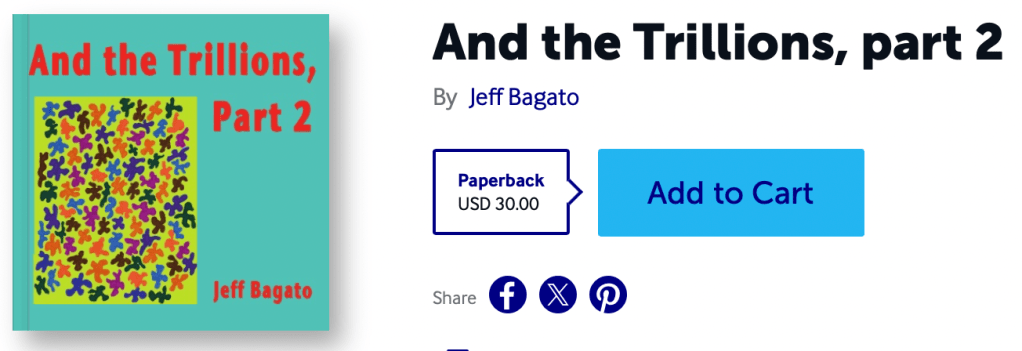
There wasn’t enough “and the trillions” in the first volume (originally released in 2012) so I wrote a sequel, naturally entitled And the Trillions, Part 2. This book length accumulative poem examines multiples as a metaphor for the complex social and natural world humans inhabit. At 280 pages, Part 2 is over 4.5 times longer than Part 1, and all new material.
And the Trillions, Part 2 is now available on Lulu, here.
 jeff bagato