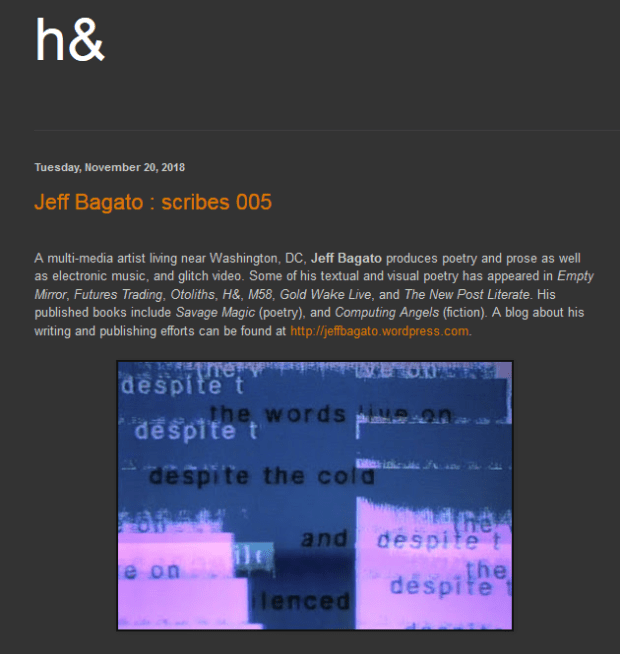
Another one of my video stills was published yesterday in experimental lit blog H&. This is an outtake from the “Silenced Scribes” video posted to YouTube. You can view the journal and image here.

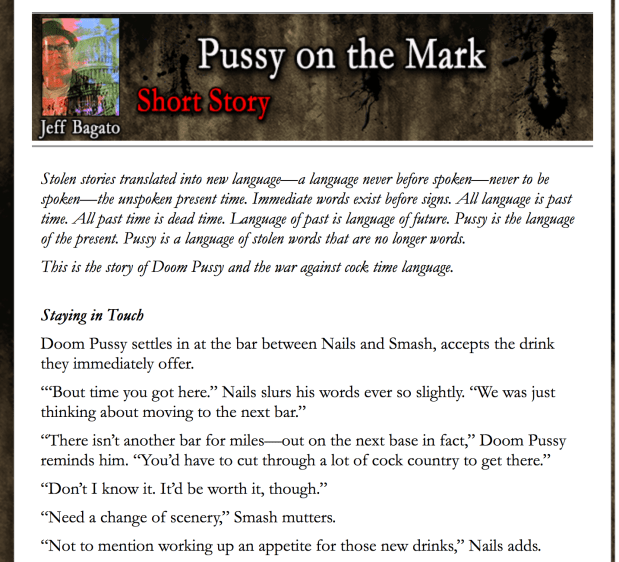
One of my short stories featuring the Doom Pussy appeared yesterday in online in outlaw literary journal The Scum Gentry. Upon accepting it, the editor remarked on its “strong Burroughsean flavor and blatantly trangressive and demented tone,” which I thought nailed it pretty well. He summarized it this way: “Pussy, Doom and Smash lay waste to their world in this experimental psychosexual sci-fi riff.” Needless to say, this involves strong language that is NSFW and for mature audiences only. Read at your own risk here.
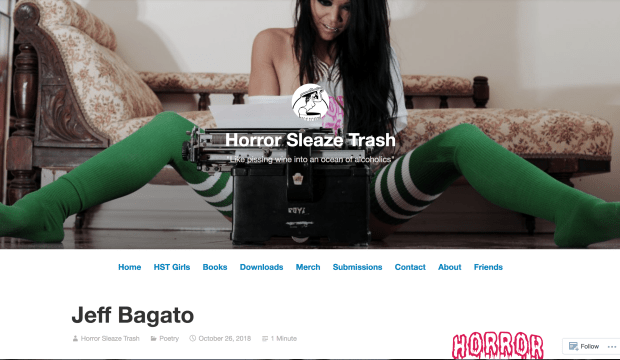
I’m a little slow on the uptake, but just learned that Horror Sleaze Trash published my poem “Popeye Pops a Boner” last Friday, Oct 26. Kind of explicit, NSFW type thing, as if the title didn’t clue you in. You can read the full piece here.
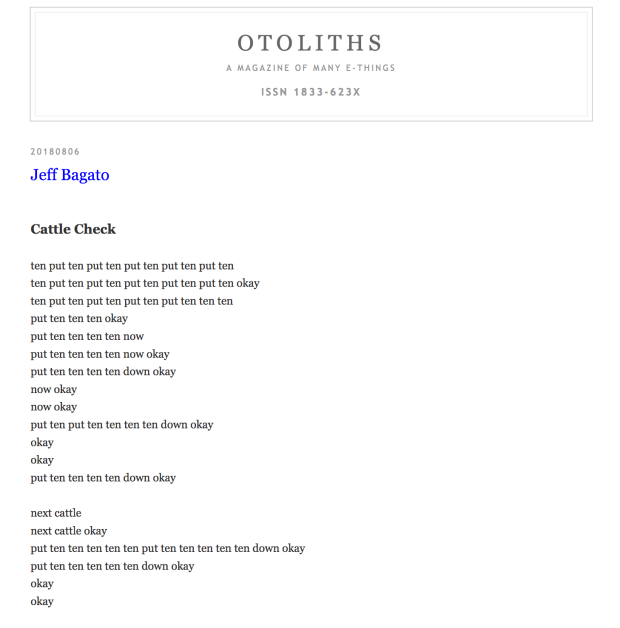
Always an event when a new issue of online experimental poetry round up Otoliths is published. Today, the journal’s 51st issue was released, marking Southern Spring (Australia), containing a who’s who from the international experimental poetry scene. Vispo, text works, hybrids, you name it.
This issue offers a selection of my work, including five stills from the video “Silenced Scribes” (view them here), and a selection of three texts from a new series tentatively called “Robot Speak”: “Cattle Check,” “Then It’s Time,” and “Ready America.” You can read them here.
These three texts form part of a new series of experiments inspired by the Facebook AI units that recently developed their own language using English words with different syntax and meaning. The AI units were intended to carry out customer service transactions and negotiations, and the format of their language seemed to be a powerful way to confront and manipulate the continuous stream of commercial messages invading our mental space.
Further, they represent an attempt to replicate a machine code constructed from an extremely limited vocabulary, often initiated by spam emails. Each piece develops by permutations, repetition, and sound/rhythm. It’s impossible for the human observer to know if the machine is analyzing or tabulating data, performing a calculation, conducting a negotiation, or making a persuasive appeal. Any of these functions is a possibility. In a way, the texts are a form of speculative fiction: looking at a machine narrative pulled from a future where AIs have been released to perform functions on their own. As in the case of the Facebook AIs, these instances show a machine or machines adapting human (English) language for their own ends. The repetition of the key words imitates a transactional language, as if a carnival barker is repeating an appeal to a potential audience. But the end result also reminds me of a magical incantation appealing to a familiar spirit.

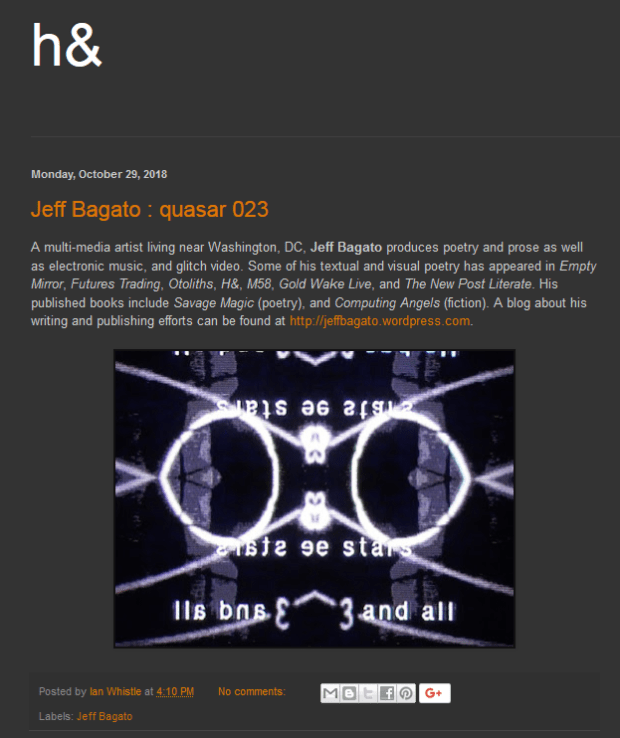
Another video still appeared in experimental poetry journal H& yesterday (Oct 29). This one’s from an unpublished video. You can view the journal and image here.

Asemic writing blog The New Post-literate posted six of my asemic poems today. These come from a large stash (85+ pieces) of this alien script, all rendered with a brush and black ink. You can check out the NPL group here.
“Asemic” writing is any text that doesn’t have a semantic value for the reader. For more examples, just browse around the images and other resources on the New Post-literate site!
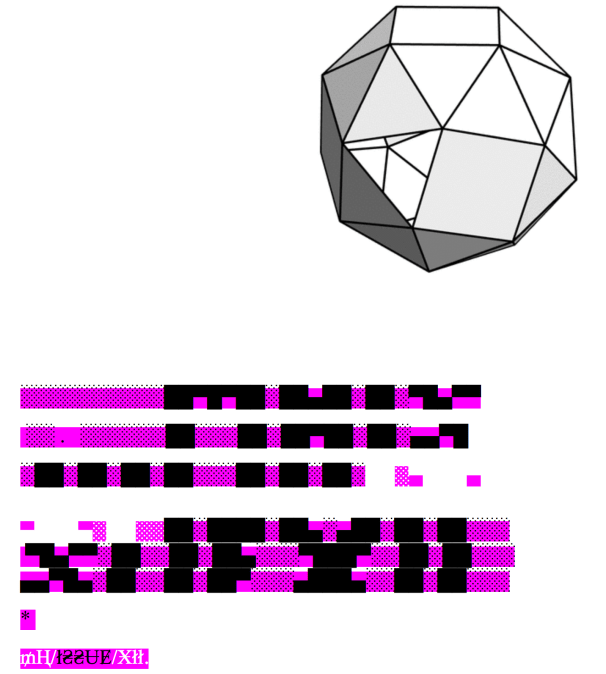
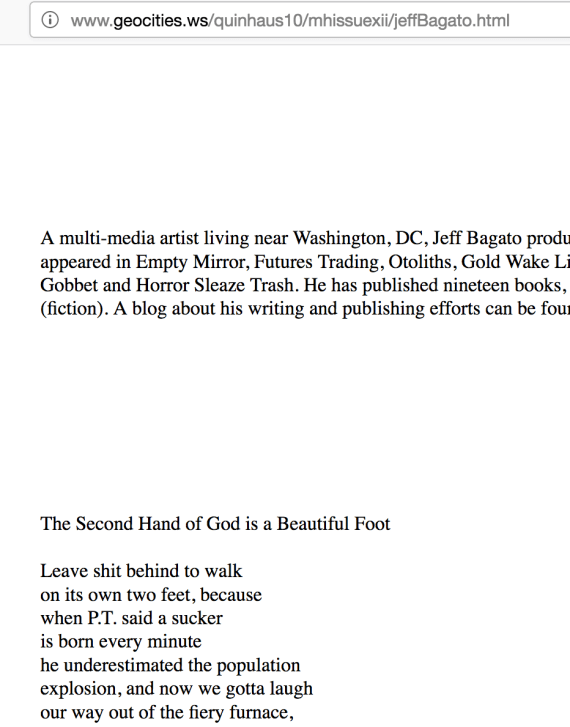
Online poetry journal Mannequin Haus focuses on surreal and experimental poetry. Their recently released Issue 12 includes my poem “The Second Hand of God is a Beautiful Foot” (excerpt below). You can read the whole piece here.
Each day since 2009, online literary journal Oddball Magazine has covered “poetry, art, and entertainment for the masses.” Today, one of their offerings includes my poem “Waiting for a Blueberry at the End of Time.” You can read it here.

Online poetry journal BlazeVOX is known for publishing a wide variety of contemporary experimental work. Their Fall 2018 issue brings together a huge number of writers around the loose theme of “the idea of ‘public space’ and more specifically on spaces where anyone can do anything at any given moment.”
The issue includes five poems from my “Civilization’s Lost” series: “Frozen in Babylon,” “Upon the High Castle,” “No Guiding Light,” “The White Grave,” and “Schools of Drift.” The pieces in the series were inspired by lost civilizations from around the world. Under the current American regime, it seems important to examine the fragility of languages, cultures and nations. “Upon the High Castle,” for instance, is based on the cliff side city of Mesa Verde in Arizona. You can read my contributions here.


Online Experimental poetry journal Brave New Word‘s Issue 12 is a tribute to Ernest Hemingway’s experimental, pre-Dada poem “Blank Verse.” You’ve probably seen it somewhere. BNW editor Volodymyr Bilyk describes it this way:
You can read his full examination of the piece (and view Hemingway’s original) on Volodymyr’s personal blog here.
All the pieces in BNW #12 are responses in some way to Papa Hemingway’s piece. There are contributions from many artists in the international experimental poetry scene, including Mark Young, John M. Bennett, Sacha Archer, Andriy Antonovskiy, and many more. Lots of amusing remixes, re-dos, and re-visionings. Who knew one could do so much with punctuation! If you like your poetry concrete and a little silly, this issue is for you.
My own response is a concrete poem called “Grawlix Grid,” an 8×10 construction of various punctuation marks. You can view it online here.

 jeff bagato