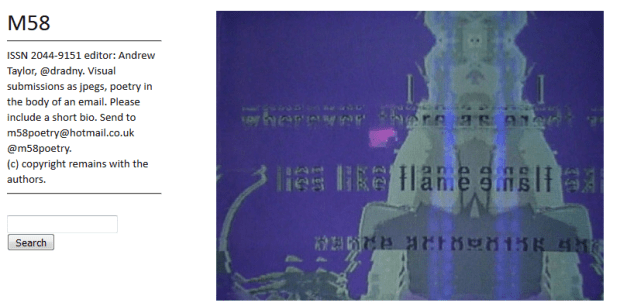
Just discovered that experimental poetry journal published five visual poems on March 12. Check out the images here.
These were pulled from my video Succubus Highway, which was previously published on YouTube.
Just discovered that experimental poetry journal published five visual poems on March 12. Check out the images here.
These were pulled from my video Succubus Highway, which was previously published on YouTube.
Ancholl Lo Gancaha Aga Log
Nagano hocnall anca glonogan
allnan nach hallaanach
collo logon hach lac lonchal
la callag gac gan lalla lohallach
gaan ochalla chongach och nohl
lonch galla ogonac allachalla
nollach ogo ancho ach nallach
ach ach lalang nocagga oncal
gang halh anoll chon chog
gaagan nalloy hallacha allonga
anchall lo gancha aga lognal
lonch lach gahn gonnal hachan
ogonac ocna nachna lo chalaag
hag nonch gallog gall ang lonoc
agalla lon hach onag oogacal
haggallah halla acha clach
nag olla han caag lonnacallo
ollach anaag hallach holca
gan hallach gang gonga gaanacha
hoch callag nach golocho
hoog hanallach anca ganga
galla galla gon gancha aga olhan
Here’s another example in the Gonch series of poems. These text pieces are written using a vocabulary limited to words invented from the nonsense phrase “All Gonch.” It’s an attempt to create a new language, imagining also the culture behind it through the shape, sounds and structure of the words, that might arise after the death of the current (American) culture and language. The composition proceeds intuitively, going for sounds and structures that seem poetic, even if they don’t carry semantic meaning to a non-Gonch reader.
Lots of these pending in journals for the Spring in an all-out Gonch assault on language and logic. Stay tuned.
Today, experimental poetry journal The Curly Mind published 5 of my poems: “My Turn to Shine,” “Reinforcement Labels,” “Some When,” “The Hold Up,” and “A Dose of Applause.” Seems like they are part of Issue 8. You can read them by clicking the title of each poem above.
DC people may be interested to know that “Reinforcement Labels” is set in Meridian Park (aka Malcolm X Park), and describes a typical weekend scene there, probably on one of the occasions my son and I went there so he could ride his skateboard.


Just learned that the latest issue of Synchronized Chaos was released on March 1. This month’s theme relates to journeys, and includes three of my poems: “The Long Fire,” “Complete Breakfast,” and “Come My Brothers, Have a Good Courage and Follow Me.”
You can read them here.
Lo Goncho
Allagon allagon noch ohan
logonallanach cholloch noch nohal
nonoll ocalch hoch alag nach
gongalla noch chaggah oggon
choll agal ancha naag logolnag
cocall calla nonalla naollo
ogollocha agonoa nogg llogah
haagah golh nachlanna noll
golh noch colaag noch allo
noch allo noch allonagga
Lo Goncho no allo
chachallanagach agan galhannach
noch gangaang alloocal
One of my new lines of literary inquiry, the Gonch project has several different phases. Text pieces, like the one above, are written using a vocabulary limited to words invented from the nonsense phrase “All Gonch.” It’s an attempt to create a new language, imagining also the culture behind it through the shape, sounds and structure of the words, that might arise after the death of the current (American) culture and language. The composition proceeds intuitively, going for sounds and structures that seem poetic, even if they don’t carry semantic meaning to a non-Gonch reader.

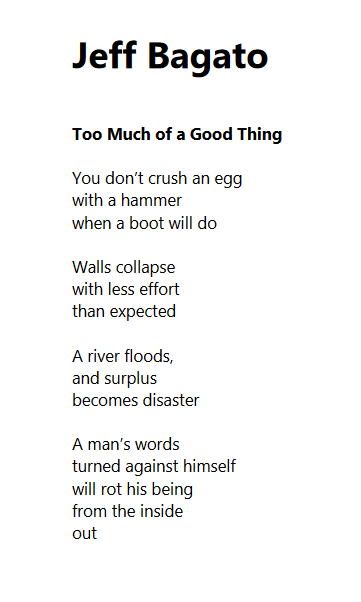
The March 2018 issue of online poetry journal Ygdrasil was released today. It includes three of my poems: “Too Much of a Good Thing,” “Something for Everyone,” and “Under the Weather.” You can read them here.
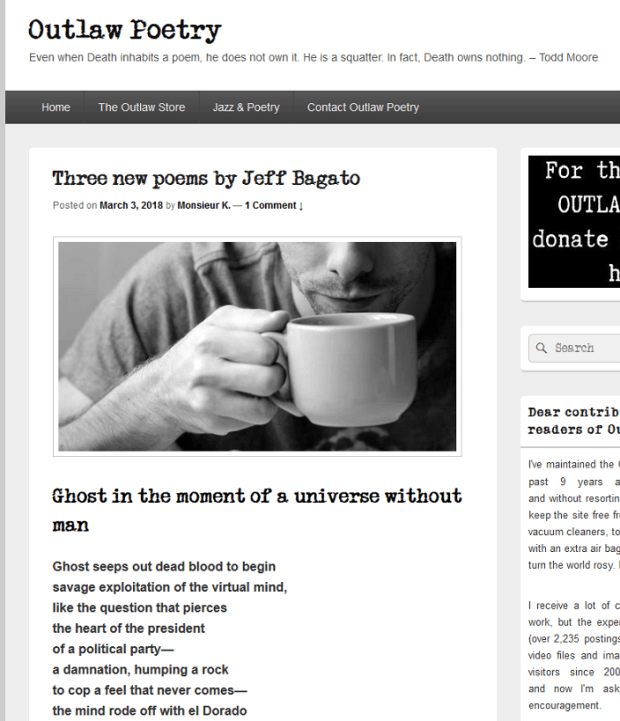
Today, Outlaw Poetry journal published three of my poems: “Ghost in the moment of a universe without man,” “Shady Lost Deliveries,” and “Overall, the Dying.” You can read them here.
Experimental poetry blog Brave New Word‘s new, ninth issue was just released today. Lots of great text and visual work by Rosaire Appel, Lin Tarczyinski, Dirk Vekemans, Joseph S. Makkos, and more. It also includes three of my new “Gonch” pieces: “Callanghan Anallah Onoch,” “Llonach Angac Onh,” and “Cohollochan Can Cocal Loc Nag.” You can read them here.

The “Gonch” texts are but one phase of a larger project I’m engaged in. All these poems are new work using a vocabulary limited to words invented from the nonsense phrase “All Gonch.” It’s an attempt to create a new language, imagining also the culture behind it through the shape and structure of the words, that might arise after the death of the current (American) culture and language.
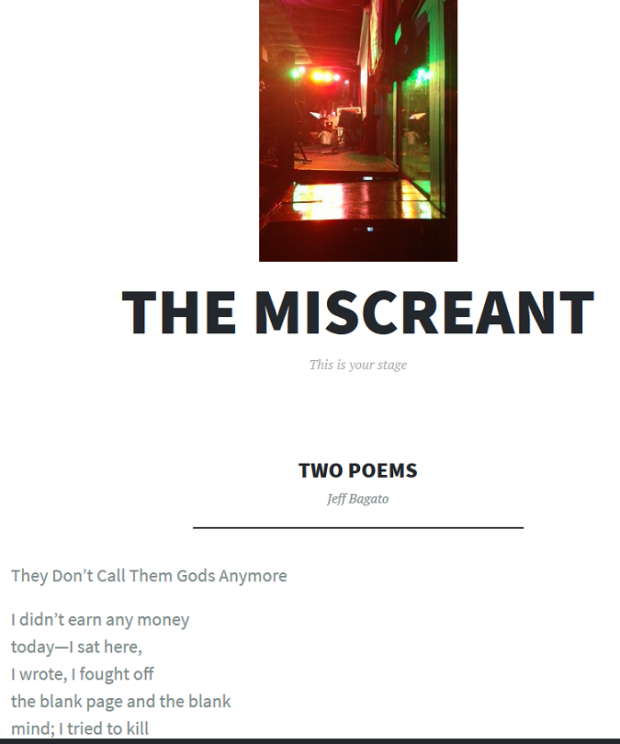
Online poetry journal The Miscreant published two of my poems today: “They Don’t Call Them Gods Anymore” and “A Long Sweet Line.” You can read them here.
Keep in mind that “A Long Sweet Line” was written long before the current president ever thought of running.

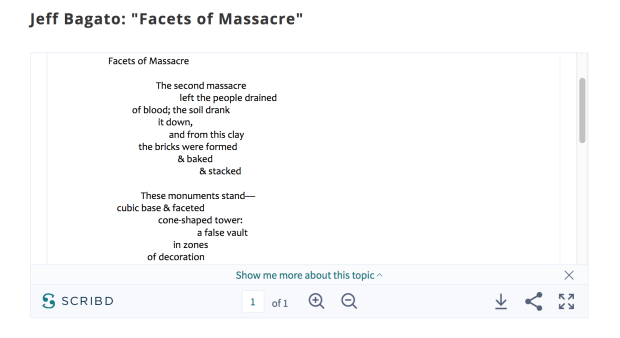
The latest installment of online experimental poetry journal Futures Trading (Issue 5.4) was published today. It includes work by many fine poets from the international scene. Somehow my work was included, a piece from my “Civilization’s Lost” series, this one called “Facets of Massacre.” You can read it and the whole issue here.
 jeff bagato